How nodes run on Global Settlement Network
Nodes secure settlement, verify network state, and connect networks. See how each role works and how to get access.
Supernode
Consensus authority
Observer
Read and verify
Validator
Settlement finality
Why run a node
Direct participation in a regulated settlement network.
Three ways to participate
Each role carries a different level of participation. Choose the one that fits your organization.

Supernode
Consensus authority operated by named, regulated institutions. Supernodes attest cross-chain settlement and hold issuer and identity authority for their corridor.
- Who it's for
- Regulated financial institutions and qualifying networks
- What it does
- Consensus authority, settlement attestation, issuer and identity registry

Observer node
Read and verify access that supports interoperability with partner ledgers. Observers verify settlement independently, with no consensus role.
- Who it's for
- Institutions and partners that need independent verification
- What it does
- Reads and verifies network state. No consensus role, no staking.

Validator node
Staked participation in network finality. Validators finalize settlement under network rules and earn protocol rewards.
- Who it's for
- Experienced node operators and institutions
- What it does
- Staked participation in settlement finality
How the network works
Settlement on Global Settlement Network, under the hood.
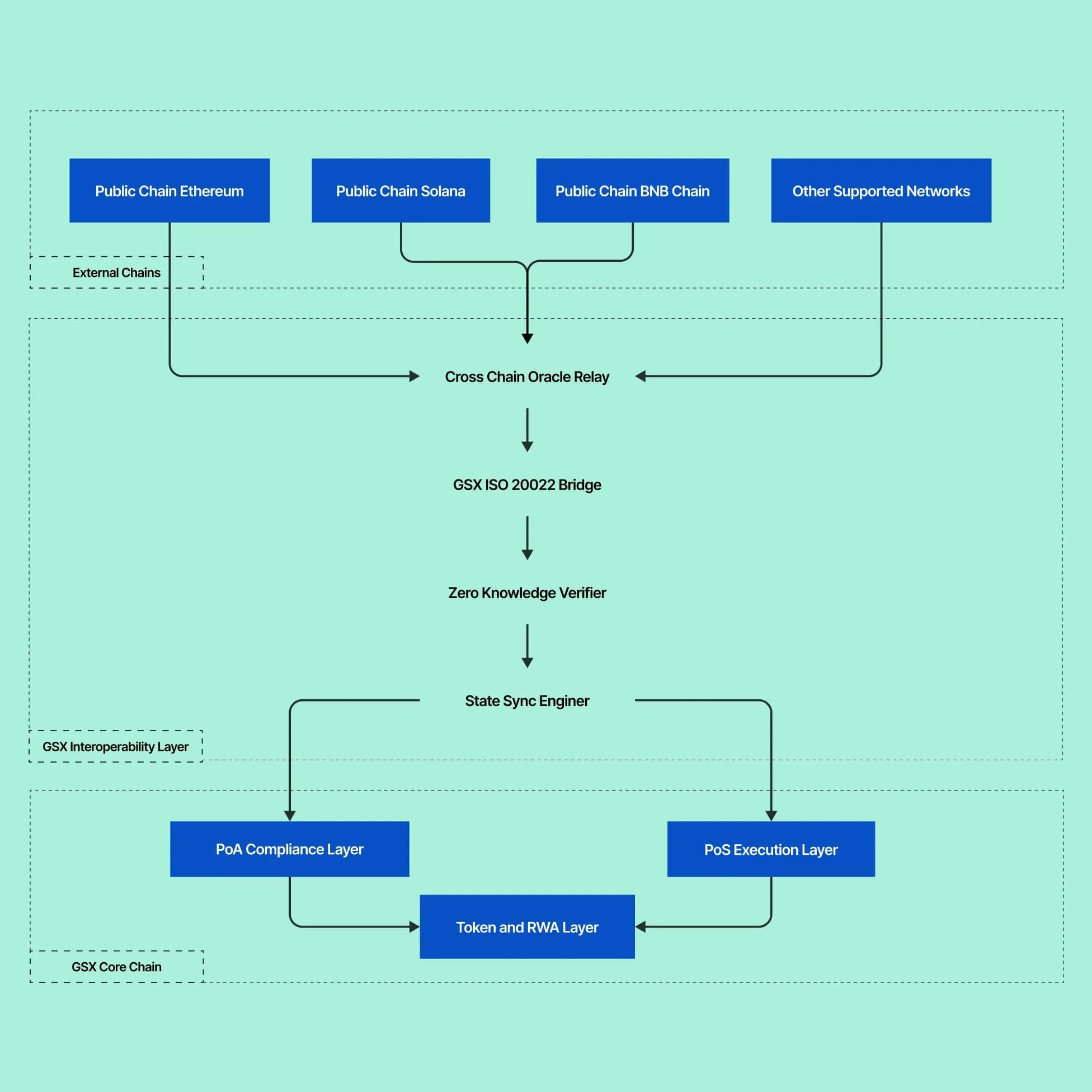
1Approved institutions authorize
Named, regulated institutions anchor the network's trust model and authorize settlement.
2Staked validators finalize
An approval-gated validator set finalizes transactions with near-real-time settlement.
3Compliance enforced in the protocol
Identity and eligibility checks are enforced at the protocol level, not bolted on.
4Bridgeless cross-network settlement
Value moves across connected networks natively, with no wrapped assets and no bridge risk.
5Post-quantum cryptography
Designed to protect high-value settlement against future cryptographic threats.
- 1
Approved institutions authorize
Named, regulated institutions anchor the network's trust model and authorize settlement.
- 2
Staked validators finalize
An approval-gated validator set finalizes transactions with near-real-time settlement.
- 3
Compliance enforced in the protocol
Identity and eligibility checks are enforced at the protocol level, not bolted on.
- 4
Bridgeless cross-network settlement
Value moves across connected networks natively, with no wrapped assets and no bridge risk.
- 5
Post-quantum cryptography
Designed to protect high-value settlement against future cryptographic threats.
Onboarding path
From application to production, every operator follows the same reviewed path.
Frequently asked questions
Who can run a node?
Node roles are open to regulated institutions, infrastructure operators, and qualifying organizations. Each role is reviewed before onboarding.
What are the staking requirements and rewards for validators?
Staking requirements, reward rates, and commercial terms are shared with approved applicants during onboarding.
Can I stake without running infrastructure?
Staked node participation requires approval first. Details on participation models are shared with approved applicants. Other staking opportunities may be available in the future.
How do I get a supernode?
Supernodes are not open to public application. They are held by named, regulated institutions, by approval. If your institution may qualify, request a briefing.
What does an observer node do?
Observers read and verify network state to support interoperability with partner ledgers. They hold no consensus role and require no staking.
Can I run a node on managed infrastructure?
Yes. Self-hosted and managed deployments are both supported. Indicate your preference in the request form.
How long does review take?
Review timelines vary with role and jurisdiction. We'll be in touch after you submit the request form.
Ready to participate in the network.
Tell us about your organization and the role you're interested in. Our team will follow up with next steps.